


Cover Letters in 2026: Slowly Dying – or Still Worth Something?
“With great interest, I read your exciting job posting …”
OMG. You read the job ad! And you didn’t just enthusiastically click “Apply”.
Joking aside: This is exactly where the problem with cover letters in 2026 begins.
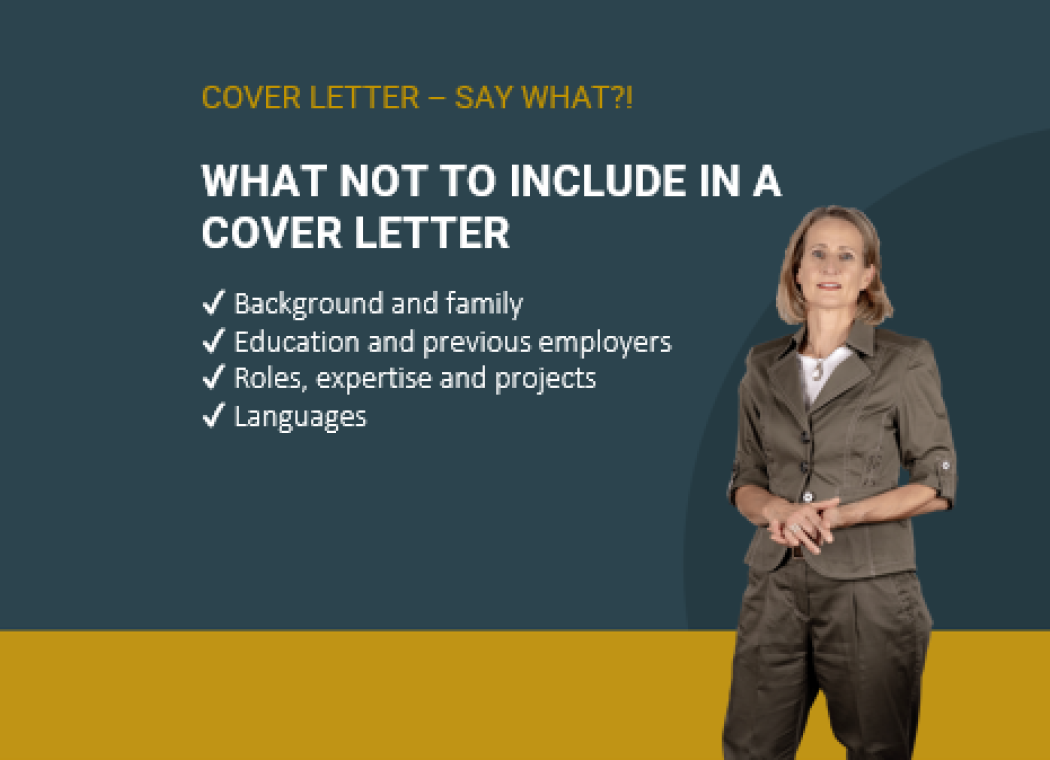
After many years in recruitment and several thousand applications, I’ve become quite pragmatic about cover letters. I do read them – but rarely from beginning to end. First, I look at your CV. Is your profile generally a good match for the role? Where did you gain the experience we’re looking for? How recent is it? Only then do I want to know what else you have to tell me.
And now that AI can produce perfect cover letters in seconds, this is even more true. Flawless language is no longer a particular achievement. Being personal, specific and relevant is.
So, what is a cover letter still good for?
To tell me something I can’t already see in your CV.
Why do you want this particular job? Why are you looking to make a change right now? Why, after ten years in a large corporation, do you suddenly want to join an SME? Why does a leadership role appeal to you – or why do you deliberately want to get closer to operational work again?
That, I’ll read.
On the other hand, I think we can safely assume that you are “highly motivated, a team player and looking for a new challenge”.
Three questions are enough
A good cover letter really only needs to answer:
- Why this role?
- Why are you a good fit?
- Why is this the right move for you now?
If you need an entire page to answer those questions, something has probably already gone wrong.
Don’t make your cover letter better. Make your CV better.
This is one of the most common mistakes I see in applications: the CV remains generic – while all the important information is hidden away in the cover letter.
Please do the exact opposite.
Your relevant expertise, technologies, projects and responsibilities should be easy to find in your CV. Especially today, when applications are processed digitally and, in some cases, pre-screened automatically.
My advice from experience: Tailor your CV to the role. Not the truth – the emphasis.
For more complex specialist profiles, a small skill sheet can sometimes achieve more than a full page of prose:
What we’re looking for
- GMP
- Batch Release
- Deviations/CAPA
- Sterile Manufacturing
What you bring
- 7 years in pharma
- Since 2023
- Investigation Lead
- Vials & PFS
As a recruiter, I love this kind of thing. Four lines – and I know more than I would after three paragraphs about your “passion”.
Can ChatGPT write your cover letter?
Of course.
It’s 2026. Pretending AI doesn’t exist would be pretty unrealistic.
Use it to shorten, improve or structure your text. Let it compare the job posting with your CV. Ask it to identify which requirements aren’t yet visible enough in your application.
But there is one essential ingredient you still need to provide yourself: your own thoughts.
Why do you really want this job?
Because if all you tell ChatGPT is, “Write me a professional cover letter for this position,” that’s exactly what you’ll get.
A professional cover letter.
And believe me, recruiters have seen enough of those by now.
What’s becoming more important again in 2026: People
AI makes applying for jobs easier. But it also means that more applications are being sent. This is exactly the paradox currently being discussed in the Swiss job market: as the number of AI-assisted applications grows, personal contacts and the hidden job market may become increasingly important again.
That matches my experience in recruitment consulting: A good contact, a personal recommendation or a recruiter who genuinely understands your profile and their market can be worth more than your 27th perfectly worded online application.
So yes, apply. But talk to people, too.
My 5 rules for 2026
- CV first. Your qualifications need to be clearly visible there.
- Keep the cover letter short. Half a page is usually more than enough.
- Only write what adds something. Don’t repeat your CV.
- AI, yes – AI-speak, no. Use the tool, but keep your own voice.
- Think beyond the “Apply” button. Networking, direct contacts and specialised recruiters are just as much a part of a successful job search.
And what if you really have nothing to say?
Then please don’t write a masterpiece about your enthusiasm for innovative corporate cultures and exciting new challenges.
Invest that time in creating a really good CV instead.
Because that, I’ll definitely read.