


AI in the Pharmaceutical Industry: Will It Soon Replace Scientists?
A recent study by the ifo Institute has sparked discussion: one in five companies already sees artificial intelligence as a potential alternative to employees with vocational or university qualifications. The headline sounds dramatic. But what does it mean for the pharmaceutical industry?
As an Executive Search Consultant in the life sciences sector, I see the development somewhat differently. The key question is not whether AI will replace scientists. The more interesting question is:
Will fewer scientists be needed in the future to accomplish the same amount of work?Wherever data is analyzed, AI is already changing the way people work
In many pharmaceutical functions, the analysis of large amounts of data is part of everyday business. This is exactly where AI demonstrates its strengths.
- In Quality Management, AI-powered systems can already categorize deviations, identify similar historical cases, detect trends, and even suggest potential root cause analyses and CAPA actions.
- In Manufacturing Science & Technology, batch data can be evaluated, process deviations identified, and opportunities for optimization highlighted. Tasks that once required hours or even days of analysis can now generate initial hypotheses within minutes.
- Pharmaceutical Development is also evolving. Modern algorithms support the evaluation of stability data, formulation optimization, and the identification of promising parameters for new manufacturing processes.
The industry is already investing heavily: this trend is far from science fiction.
- Companies such as Novartis, Roche, Pfizer, Moderna, and Sanofi have been investing in data science, advanced analytics, and AI applications for years.
- Sanofi has even entered into a strategic partnership with OpenAI to accelerate research, development, and knowledge work. Moderna has been leveraging AI for years to analyze biological data and support the development of new mRNA-based therapies.
- AI systems are also increasingly being used in Pharmacovigilance and Regulatory Affairs. They support adverse event analysis, literature monitoring, and the preparation of regulatory documentation.
What AI cannot do: despite all the progress, there is one crucial difference between pharmaceuticals and many other industries.
- AI can analyze data.
- AI can identify patterns.
- AI can generate reports.
However,
- AI cannot take responsibility.
- AI cannot make regulatory decisions.
- AI cannot sign off batch releases.
AI does not make regulatory decisions, approve batch releases, or defend critical assessments before authorities such as the FDA, EMA, or Swissmedic. In a highly regulated industry, scientific expertise remains indispensable.
The biggest impact may be on entry-level positions
Interestingly, the greatest change may not affect experienced experts but rather young scientists entering the industry.
Many early-career professionals begin their careers with literature reviews, data analysis, trend evaluations, and documentation tasks. These are precisely the activities that can be supported or partially automated by AI.
This does not necessarily mean fewer jobs. However, it may mean changing qualification profiles and higher expectations regarding analytical thinking, critical reasoning, and the effective use of AI.
My Conclusion
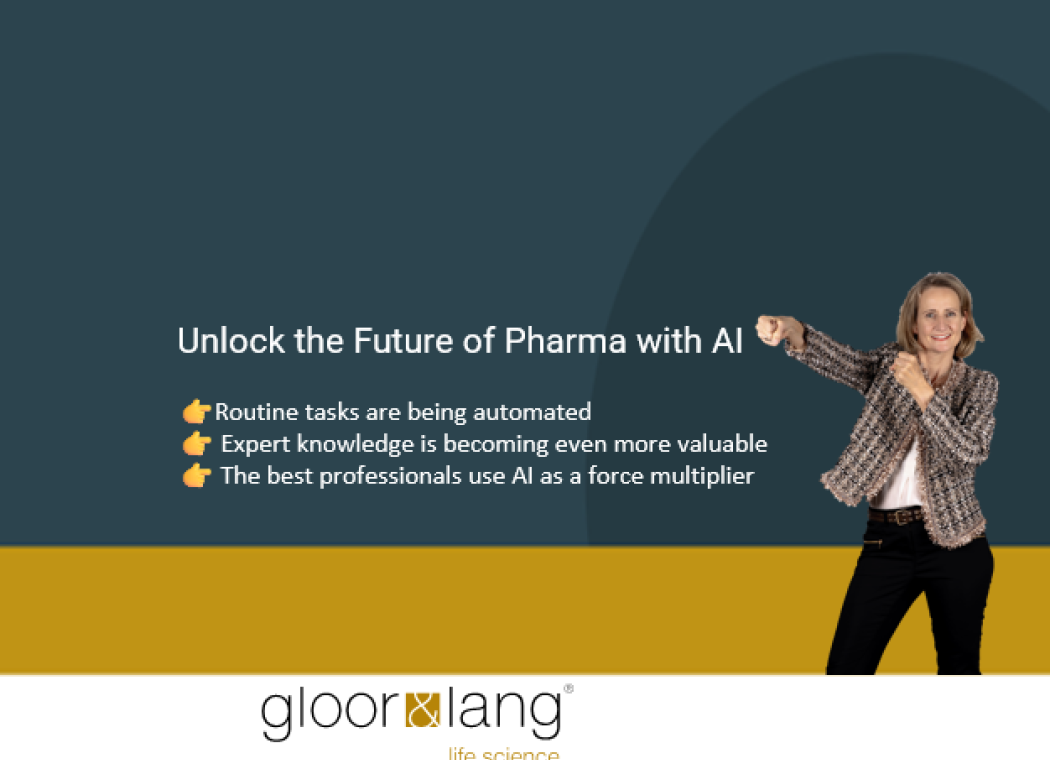
I do not believe that AI will replace scientists. However, I am convinced that it will significantly increase the productivity of many professionals.
The pharmaceutical industry will continue to require highly qualified scientists, engineers, and quality experts. At the same time, routine tasks will become increasingly automated, and data-driven decisions will be prepared more efficiently.
The winners of this transformation will not be those who reject AI. They will be those who combine scientific expertise with the intelligent use of AI.
The question is therefore not whether AI will replace scientists.
The question is: Which scientists will learn to use AI more effectively than others?